How to File a Flood Insurance Claim: Step-by-Step Guide

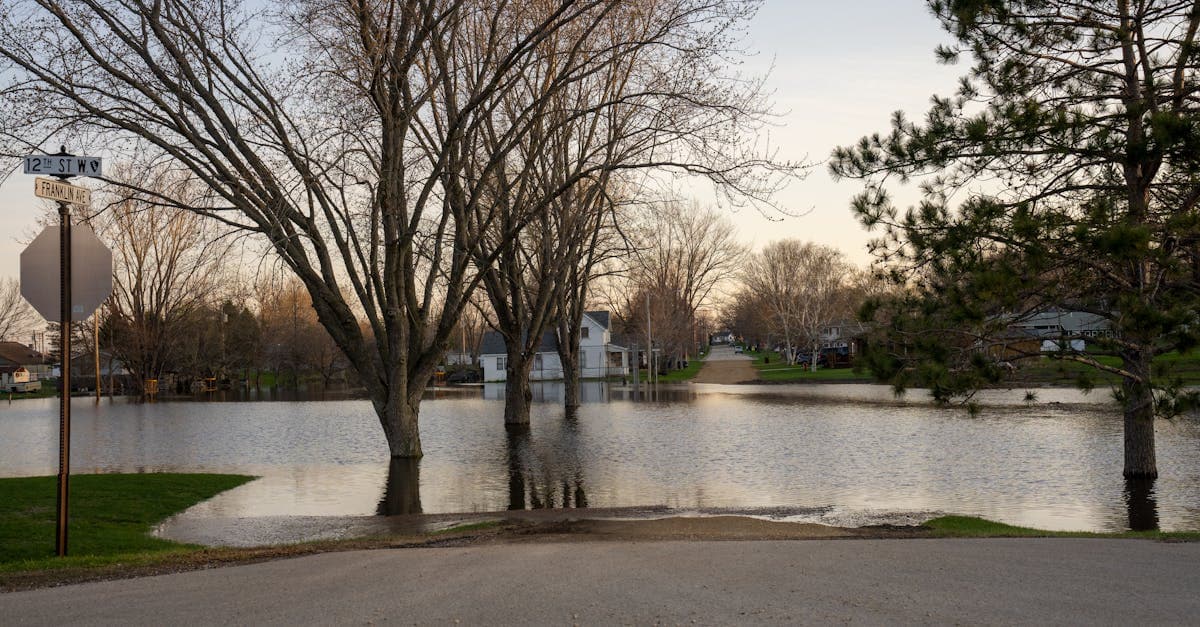
Dangerous myths about flood insurance leave millions of homeowners financially exposed to the most common natural disaster in America. Let us correct the most harmful misconceptions.
Myth one: your homeowners insurance covers flood damage. It does not. Every standard homeowners insurance policy in the United States explicitly excludes flood damage. This exclusion applies regardless of your insurer, your premium level, or how comprehensive your policy appears.
Myth two: you do not need flood insurance if you are not in a high-risk flood zone. Over 25 percent of all flood insurance claims come from properties outside high-risk flood zones. Flooding happens wherever rain falls, drains overflow, or water accumulates.
Myth three: federal disaster assistance will cover your flood losses. FEMA disaster grants average around $5,000 — a fraction of typical flood damage. SBA disaster loans must be repaid with interest. Neither replaces the protection that flood insurance provides.
Myth four: flood insurance is too expensive. Preferred Risk Policies for properties in moderate-to-low risk zones can cost as little as $129 per year. Even standard-rated policies average around $700 annually — far less than the cost of repairing flood damage out of pocket.
Understanding the reality of flood insurance is the elevated foundation that lifts your financial security above the flood line by providing dedicated coverage that your homeowners insurance was never designed to include. These myths must be cleared away so you can make an informed decision about whether flood insurance belongs in your financial protection plan. For most homeowners, the answer is yes.
Flood Insurance and Basements: Understanding Limited Below-Grade Coverage
Here is what you actually need to do. Basement coverage under flood insurance is one of the most misunderstood aspects of the policy. Many homeowners are shocked to learn that their finished basement is largely excluded from flood insurance coverage.
What counts as a basement: For flood insurance purposes, a basement is any area of the building with a floor that is below ground level on all sides. This includes traditional basements, fully below-grade rooms, and sub-grade crawl spaces used as living or storage areas.
Covered items in basements: Flood insurance covers essential systems and equipment in basements: furnaces, boilers, water heaters, heat pumps, air conditioners, sump pumps and their discharge pipes, electrical junction boxes, circuit breaker panels, utility connections, fuel tanks and fuel, stairways, and elevators.
Items not covered in basements: Finished walls, drywall, paneling, flooring, tile, carpet, ceiling finishes, window treatments, and any personal property stored in the basement are not covered by flood insurance. This means a $30,000 finished basement — with drywall, carpet, cabinets, and entertainment equipment — receives virtually no coverage from a flood policy.
The financial impact: Homeowners who invest in finished basements in flood-prone areas face a significant coverage gap. The flood insurance policy will pay to restore essential systems but will not pay for the finished improvements that made the space livable. This can represent tens of thousands of dollars in uninsured losses.
Protecting basement investments: If you have a finished basement and flood risk, consider these strategies: maintain a dedicated savings fund for basement restoration, investigate private flood policies that may offer broader basement coverage, and install water detection systems and sump pumps with battery backup to reduce the likelihood and severity of basement flooding.
Above-grade alternatives: When possible, locate valuable improvements and personal property above grade level. Moving a home office, entertainment center, or guest bedroom to an above-grade floor brings those investments under the full protection of your flood insurance policy.
Elevation Certificates: How Your Home's Height Affects Your Flood Insurance
The fix is straightforward. An elevation certificate is a critical document that can significantly affect your flood insurance premium by documenting your home's height relative to the expected flood level in your area.
What an elevation certificate documents: An elevation certificate records your home's lowest floor elevation, the base flood elevation for your area, the difference between the two, and other building characteristics that affect flood risk. It must be prepared by a licensed surveyor, engineer, or architect.
How elevation affects your premium: If your lowest floor is above the base flood elevation, your premium decreases — potentially by hundreds or thousands of dollars per year. If your lowest floor is below the BFE, your premium increases proportionally to the depth of exposure.
When you need one: An elevation certificate is required for new construction in flood zones, for obtaining an accurate premium quote in high-risk zones, and for applying for a Letter of Map Amendment. Even when not required, obtaining an elevation certificate often reveals that your home qualifies for a lower premium.
Cost of an elevation certificate: A licensed surveyor typically charges $200 to $500 for an elevation certificate. This one-time cost can generate annual premium savings of $500 or more, making it one of the best investments a homeowner in a flood zone can make.
Elevation certificates and new construction: Homes built after the community's first flood map must be built to or above the base flood elevation. The elevation certificate documents compliance and serves as the basis for accurate flood insurance premium calculation.
Sharing your elevation certificate: Provide your elevation certificate to your insurance agent and keep a copy in your records. If you sell your home, the elevation certificate transfers to the new owner and helps them obtain accurate flood insurance pricing without commissioning a new survey.
How to File a Flood Insurance Claim: The Step-by-Step Process
Here is what you actually need to do. Filing a flood insurance claim follows a specific process that differs from standard homeowners insurance claims. Understanding the steps in advance helps you document damage properly and receive your full claim payment.
Step one — document the damage: Before any cleanup begins, photograph and video all flood damage from multiple angles. Document the water line height on walls, damaged structural elements, destroyed personal property, and the extent of water penetration. This documentation is your primary evidence for the claim.
Step two — report the claim promptly: Contact your flood insurance company as soon as possible after the flood recedes. NFIP policies require you to report the claim within 60 days of the flood event. Your insurer assigns a claim number and schedules an adjuster visit.
Step three — separate flood damage from other damage: If the same event caused both flood and wind damage, separate the two for claims purposes. Flood damage goes to your flood insurer. Wind damage goes to your homeowners insurer. Documenting the cause of each type of damage is essential for proper claim processing.
Step four — meet with the adjuster: The flood claims adjuster inspects your property, documents the flood-related damage, and prepares a repair estimate. Be present during the inspection to point out all flood damage including hidden damage behind walls, under flooring, and in mechanical systems.
Step five — submit your proof of loss: NFIP claims require a signed and sworn proof of loss statement within 60 days of the adjuster's report. This document itemizes all flood damage and the claimed amounts. It is a legal requirement for NFIP claims that many homeowners are not aware of until after the flood.
Step six — receive payment and begin repairs: Once your claim is approved, the insurer pays the covered amount minus your deductible. Building claims may be paid in installments as repairs progress. Begin repairs promptly to prevent additional damage from mold, structural deterioration, or weather exposure.
The History of Flood Insurance: From Crisis to the Modern NFIP
The fix is straightforward. The history of flood insurance in America explains why the coverage exists as a separate government program and how it has evolved to address the growing financial impact of flooding.
The pre-NFIP era: Before 1968, private insurers refused to offer flood coverage because flood risk was too concentrated and catastrophic for private markets to handle profitably. Homeowners in flood-prone areas had no insurance option and relied entirely on personal savings and federal disaster relief after floods.
The 1968 creation of the NFIP: After devastating floods in the 1960s, Congress passed the National Flood Insurance Act of 1968, creating the NFIP. The program offered flood coverage that private markets would not provide, in exchange for communities adopting floodplain management regulations.
The 1973 mandate: The Flood Disaster Protection Act of 1973 required flood insurance for properties with federally backed mortgages in high-risk flood zones. This mandate dramatically increased flood insurance adoption and established the connection between flood maps, mortgages, and insurance that exists today.
Major storm impacts: Each major flood event shaped the NFIP. Hurricane Katrina in 2005 generated $16 billion in claims and exposed pricing inadequacies. Superstorm Sandy in 2012 caused $9 billion in claims and revealed operational challenges. Hurricane Harvey in 2017 produced $9 billion in claims, with many affecting homes outside mapped flood zones.
Reform legislation: The Biggert-Waters Act of 2012 attempted to move NFIP pricing toward actuarial rates. The Homeowner Flood Insurance Affordability Act of 2014 slowed the rate increases. Risk Rating 2.0, implemented in 2021, represents the most comprehensive pricing reform in the program's history.
Current challenges: The NFIP carries over $20 billion in debt to the US Treasury. Congress has repeatedly extended the program through short-term reauthorizations rather than comprehensive reform. The growing private flood insurance market provides competition but cannot yet replace the NFIP's role as the primary flood insurer for American homeowners.
Flood Insurance and Mortgage Requirements: When Coverage Is Mandatory
The fix is straightforward. Federal law requires flood insurance for certain properties with federally backed mortgages. Understanding these requirements helps you comply with your lender's obligations and avoid costly force-placed coverage.
The mandatory purchase requirement: The Flood Disaster Protection Act of 1973 requires flood insurance for properties in Special Flood Hazard Areas (high-risk zones A and V) that have mortgages from federally regulated or insured lenders. This includes loans backed by Fannie Mae, Freddie Mac, FHA, VA, and USDA.
Coverage amount requirements: Your lender requires flood coverage equal to the lesser of the outstanding mortgage balance, the maximum available under the NFIP ($250,000 for residential), or the replacement cost of the building. The lender verifies coverage at closing and at each renewal.
Force-placed insurance: If you fail to maintain required flood insurance, your lender will purchase coverage on your behalf — called force-placed insurance. Force-placed flood policies are significantly more expensive than standard policies and provide minimal coverage. The cost is added to your mortgage payment.
Escrow requirements: The Biggert-Waters Act requires lenders to escrow flood insurance premiums for loans made, increased, extended, or renewed after January 2016 in high-risk flood zones. Your monthly mortgage payment includes the flood insurance premium just like property taxes and homeowners insurance.
Properties outside high-risk zones: If your property is in a moderate or low-risk zone, your lender generally does not require flood insurance. However, flooding in these zones is common, and your lender may recommend coverage even when it is not mandatory.
Refinancing and flood insurance: When refinancing, your new lender will verify your property's flood zone. If your property is in a high-risk zone, you must have flood insurance in place before closing. If you currently have a flood policy, it can be transferred to satisfy the new lender's requirement without triggering a new waiting period.
Flood Insurance vs Federal Disaster Assistance: Why Insurance Is Superior
Here is what you actually need to do. Many homeowners assume that federal disaster assistance will cover their flood losses if they do not have flood insurance. This assumption is one of the most costly mistakes a homeowner can make. Understanding the difference between insurance and disaster aid is critical.
FEMA grants are limited: The average FEMA disaster grant is approximately $5,000 per household. The maximum individual assistance grant is around $42,500, but most recipients receive far less. Compare this to average flood insurance claims of $52,000. The gap between disaster aid and actual flood damage is enormous.
Disaster loans must be repaid: The primary form of federal flood assistance beyond small grants is SBA disaster loans. These are loans — not gifts — with interest rates around 2 to 4 percent and repayment terms of up to 30 years. A $50,000 SBA loan to repair flood damage adds a second mortgage payment to your household budget.
Disaster declarations are not guaranteed: FEMA assistance requires a presidential disaster declaration. Not all floods trigger a declaration. If your area floods without a federal declaration, no FEMA assistance is available. Flood insurance pays regardless of whether a disaster is declared.
Insurance pays more, faster: Flood insurance claims are processed independently of disaster declarations. Your adjuster inspects the damage, you file your proof of loss, and the insurer pays your claim. The process typically takes weeks, not the months that federal disaster assistance often requires.
The financial comparison: At $700 per year, a homeowner pays $21,000 in flood insurance premiums over 30 years and has access to $250,000 in building coverage and $100,000 in contents coverage for any flood event. Without insurance, they receive $5,000 from FEMA if a disaster is declared — or nothing if it is not — plus the option to take on tens of thousands of dollars in disaster loan debt.
The clear conclusion: Flood insurance is dramatically superior to federal disaster assistance in every measurable way — coverage amount, payment speed, reliability, and total financial impact. Disaster assistance is a last resort, not a substitute for insurance.
What Flood Insurance Covers: Building and Contents Protection Detailed
The fix is straightforward. Understanding exactly what your flood insurance covers is the elevated foundation that lifts your financial security above the flood line by providing dedicated coverage that your homeowners insurance was never designed to include. The coverage is substantial but has important limitations that every policyholder should know.
Building coverage includes: The physical structure of your home — foundation, walls, floors, ceilings, and roof. Electrical and plumbing systems. HVAC equipment including furnaces and air conditioners. Water heaters and well water tanks. Built-in appliances like dishwashers, stoves, and built-in refrigerators. Permanently installed carpeting over unfinished flooring. Window blinds. Detached garages up to 10 percent of building coverage.
Contents coverage includes: Personal property inside the insured building — furniture, clothing, electronics, portable appliances, curtains, area rugs, and washer-dryers that are not built in. Contents coverage must be purchased separately from building coverage and has a maximum of $100,000 under the NFIP.
Basement coverage limitations: Flood insurance covers only specific items in basements and below-grade enclosures: utility connections, furnaces, water heaters, heat pumps, sump pumps, electrical junction boxes, and circuit breaker panels. Finished walls, floors, ceilings, and personal property stored in basements are not covered.
What counts as a flood: For insurance purposes, a flood is a general and temporary condition where two or more acres of normally dry land or two or more properties are inundated by water or mudflow. The water must come from an external source — rivers, tidal water, rainfall runoff, storm surge, or similar sources.
Increased Cost of Compliance: NFIP policies include ICC coverage that provides up to $30,000 to help bring your home into compliance with current flood building codes after a covered flood loss. This can fund elevation, floodproofing, relocation, or demolition if your community requires it.
Coverage you might not expect: Flood insurance covers debris removal, reasonable access to the insured property, and certain costs associated with relocating your belongings to prevent further flood damage. These ancillary coverages provide additional value beyond basic repair and replacement.
The Bottom Line on Flood Insurance
Your homeowners insurance is a comprehensive policy that covers many perils — but it has a critical blind spot for flooding. Flood insurance fills that blind spot with dedicated coverage specifically designed for the unique financial characteristics of flood damage.
Understanding flood insurance is the elevated foundation that lifts your financial security above the flood line by providing dedicated coverage that your homeowners insurance was never designed to include. Know what it covers. Know what it costs. Know whether your lender requires it. And know that you cannot buy it at the last minute because of the 30-day waiting period.
Flood insurance exists because private insurers historically could not profitably cover flood risk, and because floods devastate homeowners who lack financial protection. The NFIP and the growing private market provide accessible, affordable coverage for any homeowner who chooses to protect their largest investment.
Purchase flood insurance before you need it. Review it annually. And enter every rain season, hurricane season, and spring thaw knowing that your home and finances are protected against the one major peril your homeowners insurance refuses to cover.
Continue reading

How to Use an Insurance Quote Comparison Spreadsheet Effectively
A simple spreadsheet that lines up coverage elements side by side transforms confusing quotes into clear comparisons. Setting up this tool correctly makes your decision data-driven rather than gut-driven.

Policy Checkup for Auto Insurance: Are You Still Getting the Best Deal?
Auto insurance checkups should review liability limits, collision and comprehensive deductibles, uninsured motorist coverage, and available discounts. Driving changes and vehicle changes affect your needs.

When Assignment of Benefits Hurts Policyholders: Warning Signs
AOB can go wrong when contractors inflate bills, file lawsuits without your knowledge, or perform shoddy work you cannot control. Recognizing warning signs protects you from AOB abuse.