The Two-Payment Process in Replacement Cost Claims

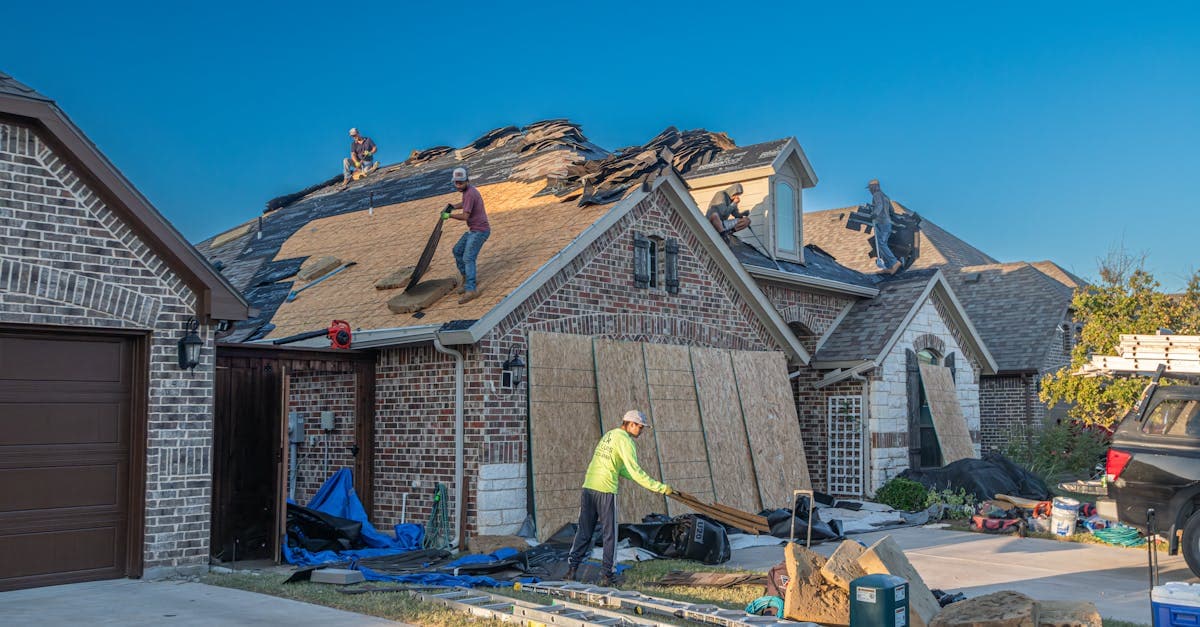
The myths surrounding replacement cost lead to some of the most expensive mistakes in property insurance. Let us clear them up.
Myth one: replacement cost is the same as your home's market value. Wrong. Market value includes land, location, and buyer demand. Replacement cost covers only the structure itself — materials and labor to rebuild. Your home could have a market value of $600,000 but a replacement cost of only $350,000, or vice versa.
Myth two: your insurer's replacement cost estimate is always accurate. Not necessarily. Insurers use proprietary estimation tools that may not account for custom features, recent renovations, or local cost spikes. An independent estimate often reveals discrepancies.
Myth three: replacement cost coverage means the insurer pays you the full amount immediately. In most cases, the insurer initially pays actual cash value and reimburses the depreciation only after you complete the repairs or replacement. This two-step process catches many policyholders off guard.
Myth four: if your policy says replacement cost, everything is covered at replacement cost. Not always — many homeowners policies provide replacement cost for the dwelling but actual cash value for personal property unless you add an endorsement. Check your policy carefully.
The truth about replacement cost is that it represents the full construction estimate for raising the same walls today. It is the most accurate measure of your insurance need because it answers the only question that matters after a loss: how much does it cost to make you whole again at today's prices? This guide replaces the myths with facts and gives you the tools to ensure your replacement cost coverage is adequate.
Extended Replacement Cost Coverage
Here is what you actually need to do. Extended replacement cost coverage provides a buffer above your dwelling coverage limit, typically paying 125 to 150 percent of the stated limit if actual rebuilding costs exceed the limit. This endorsement protects against cost overruns that are beyond your control.
How it works: If your dwelling coverage limit is $300,000 and you have a 25 percent extended replacement cost endorsement, the insurer will pay up to $375,000 to rebuild your home. This additional $75,000 buffer protects against unexpected cost increases during reconstruction.
When it matters most: Extended replacement cost is most valuable after widespread disasters when demand surge drives up construction costs. After a hurricane or wildfire that destroys hundreds of homes simultaneously, contractors, materials, and labor become scarce. Prices spike 20 to 50 percent or more above normal levels. Standard replacement cost coverage at the stated limit may fall short.
Typical endorsement levels: Most insurers offer extended replacement cost at 125 percent or 150 percent of the dwelling limit. The cost is typically modest — $50 to $200 per year depending on your base premium and the extension percentage.
Differences from guaranteed replacement cost: Extended replacement cost has a cap — 125 or 150 percent. Guaranteed replacement cost has no cap and pays whatever it costs to rebuild, regardless of the amount. Guaranteed RC is rare and typically available only for high-value homes through specialty insurers.
Who should consider it: Every homeowner should strongly consider extended replacement cost coverage. The endorsement is affordable, and the scenarios it protects against — post-disaster cost surges, unexpected code requirements, material price spikes — are both common and financially significant.
Limitations: Extended RC still has a ceiling. In extreme post-disaster scenarios, costs can exceed even 150 percent of the estimated replacement cost. However, the buffer it provides covers the vast majority of cost overrun situations.
Building Code Changes and Replacement Cost
The fix is straightforward. When you rebuild after a loss, you must comply with current building codes — not the codes that were in effect when your home was originally built. Code-required upgrades can add significant cost beyond your standard replacement cost estimate.
The code compliance gap: Building codes evolve continuously. A home built 20 years ago was designed to the codes of that era. When rebuilt, it must meet current codes, which may require enhanced hurricane straps, improved insulation, updated electrical panels, arc-fault circuit interrupters, upgraded plumbing, fire-rated materials, and accessibility features.
The cost impact: Code-required upgrades can add 10 to 25 percent to the cost of rebuilding, depending on the age of the original structure and the extent of code changes. On a $300,000 rebuild, that is $30,000 to $75,000 in additional costs.
Standard replacement cost does not cover code upgrades: Most standard replacement cost provisions cover rebuilding to the pre-loss condition — not to current code requirements. The cost of mandated upgrades falls outside the standard coverage.
Ordinance or law coverage: This endorsement specifically covers the additional cost of complying with current building codes during reconstruction. It typically includes three components: coverage for the cost of demolishing the undamaged portion of a building required by code, coverage for the increased cost of rebuilding to current codes, and coverage for the loss of the undamaged portion.
How much ordinance coverage to carry: Most insurers offer ordinance or law coverage at 10, 25, or 50 percent of your dwelling limit. For older homes in jurisdictions with significantly updated codes, 25 percent or more is recommended.
A real example: After a fire in a 1960s home, the local building department required the entire electrical system to be upgraded to current code, even though only the kitchen was damaged. The upgrade cost $15,000 — covered by the homeowner's ordinance or law endorsement but not by the standard dwelling coverage.
Replacement Cost in Auto Insurance
In practice, this works out to Auto insurance traditionally uses actual cash value to settle total loss claims, but some insurers now offer replacement cost or new car replacement endorsements that can significantly increase your payout.
Standard auto total loss settlement: When your vehicle is totaled, the insurer pays its actual cash value — essentially the fair market value of the vehicle immediately before the loss. For a three-year-old car that cost $35,000 new, the ACV might be $22,000, leaving a $13,000 gap between what you receive and what it costs to buy the same car new.
New car replacement coverage: This endorsement pays to replace your totaled vehicle with a brand-new model of the same make and model, rather than paying ACV. It is typically available for vehicles that are less than two to three years old and have fewer than a specified mileage limit.
Better car replacement: Some insurers offer a middle ground that pays to replace your totaled vehicle with one that is one or two model years newer, with lower mileage. This option costs less than new car replacement while still providing more than ACV.
Gap insurance: While not technically replacement cost, gap insurance covers the difference between your car's ACV and the outstanding loan or lease balance. This protects you from owing money on a vehicle you no longer have.
Cost: New car replacement endorsements typically add $20 to $50 per year to your auto premium. Gap insurance costs $20 to $40 per year through your auto insurer, or it can be purchased through your dealer at a higher cost.
When these endorsements make sense: New car replacement is most valuable during the first two to three years of ownership, when depreciation is steepest. After that, the gap between ACV and new car price narrows. Gap insurance is essential whenever your loan balance exceeds your vehicle's ACV — common with low down payments or long loan terms.
Time Limits in Replacement Cost Claims
Here is what you actually need to do. Replacement cost policies typically impose deadlines for completing repairs and claiming recoverable depreciation. Missing these deadlines can permanently reduce your claim payout to actual cash value.
Common time limits: Most policies require you to complete replacement or repairs within a specified period after the loss — commonly 180 days, one year, or two years. The exact timeframe varies by insurer and state regulation.
What happens if you miss the deadline: If you do not complete replacement within the specified period, most policies convert your claim to an ACV settlement. You keep the initial ACV payment but forfeit the recoverable depreciation — potentially thousands of dollars.
State protections: Some states mandate minimum replacement periods. For example, certain states require insurers to allow at least one year for replacement, and some require two years. Check your state's insurance regulations for minimum timeframes.
Extensions: Most insurers will grant extensions if you have a legitimate reason for the delay — such as contractor availability after a widespread disaster, permitting delays, or material supply chain issues. Request extensions in writing before the original deadline expires.
Partial replacement: If you can replace some items within the deadline but not others, submit for recoverable depreciation on the completed items. This preserves your recovery for those items even if other replacements are still pending.
Strategic considerations: Start the replacement process as soon as your ACV payment arrives. Delays early in the process compress the time available for completion. Keep your insurer informed of your progress and any obstacles you encounter.
Documentation: Maintain records of every step — contractor selection, contract signing, material ordering, permit applications, construction progress, and completion. This documentation supports any extension request and proves timely completion for recoverable depreciation claims.
Replacement Cost vs Actual Cash Value: A Detailed Comparison
The fix is straightforward. Understanding the difference between replacement cost and actual cash value is one of the most important distinctions in property insurance. The valuation method your policy uses directly determines how much you receive after a loss.
Replacement cost (RC) pays the current cost to replace damaged property with new items of similar kind and quality. No depreciation is deducted. If your eight-year-old washing machine is destroyed, RC pays the full price of a new equivalent model.
Actual cash value (ACV) pays the replacement cost minus depreciation. Using the same washing machine example, if the new model costs $800 and the insurer depreciates it at 10 percent per year for eight years, the ACV is $800 minus $640, or only $160.
The math across a full loss: In a total home loss, the cumulative difference is staggering. Consider a home with $200,000 in personal property at replacement cost. If the average item is seven years old with a 10-year useful life, the aggregate ACV might be only $140,000. That is a $60,000 gap the homeowner must cover.
Premium difference: Replacement cost coverage for personal property typically adds 10 to 15 percent to the contents portion of your premium. On a typical homeowners policy, this might mean $50 to $150 per year — a modest investment for significantly better claim payouts.
Which policies use which: Most homeowners policies provide replacement cost for the dwelling structure by default. Personal property coverage often defaults to ACV unless you specifically add a replacement cost endorsement. Renters policies vary — some include RC for contents, others default to ACV. Always check your declarations page and policy provisions.
The clear recommendation: For most policyholders, replacement cost coverage for both dwelling and personal property is worth the additional premium. The scenarios where ACV coverage is adequate are narrow — primarily when insuring older, lower-value property where the premium savings outweigh the coverage reduction.
Replacement Cost for Personal Property
In practice, this works out to While most homeowners policies provide replacement cost coverage for the dwelling structure, personal property — your belongings — may default to actual cash value coverage. Understanding this distinction and adding RC coverage for contents is one of the most impactful endorsements you can purchase.
The default problem: Many standard homeowners policies (HO-3) provide replacement cost for the dwelling but ACV for personal property. This means your home is rebuilt at current prices, but your furniture, electronics, clothing, and other belongings are valued at depreciated prices.
The impact: Consider a living room destroyed by fire. A new sofa costs $2,000 but the seven-year-old sofa that burned has an ACV of only $600. A new TV costs $1,500 but the four-year-old one is valued at $375. Across an entire household, these depreciation gaps add up to thousands or tens of thousands of dollars.
The endorsement: A replacement cost endorsement for personal property eliminates depreciation from contents claims. The endorsement, sometimes called HO-235 or contents replacement cost, typically costs 10 to 15 percent more than the contents premium — often $50 to $150 per year.
How it works in claims: With the RC endorsement, your claim payment covers the cost of new items that are functionally equivalent to what you lost. The two-payment process still applies — you receive ACV initially and recoverable depreciation after purchasing replacements.
Items typically excluded from RC: Even with the endorsement, some items may be excluded from replacement cost coverage: antiques (replaced at ACV or appraised value), property not in usable condition before the loss, obsolete items with no functional equivalent, and items subject to scheduled coverage.
Recommendation: If you do not already have replacement cost coverage for personal property, contact your agent and add the endorsement. The premium increase is modest, and the claim payout improvement in any significant loss is substantial.
Demand Surge: When Replacement Cost Skyrockets
Here is what you actually need to do. After a major disaster, replacement costs can increase dramatically as hundreds or thousands of homeowners compete for limited contractors, materials, and labor. This phenomenon, called demand surge, can push rebuilding costs 20 to 50 percent or more above pre-disaster estimates.
What causes demand surge: When a hurricane, wildfire, or tornado damages hundreds of homes simultaneously, the local construction market is overwhelmed. Contractors are booked months in advance. Material suppliers face shortages. Skilled labor becomes scarce. Basic supply-and-demand economics drives prices sharply higher.
Historical examples: After Hurricane Andrew in 1992, rebuilding costs in south Florida surged 30 to 40 percent above pre-storm estimates. After the 2017 and 2018 California wildfires, rebuilding costs in affected areas increased 30 to 50 percent. After Hurricane Ian in 2022, southwest Florida experienced similar surges.
How demand surge affects your coverage: If your dwelling coverage limit is based on pre-disaster replacement cost estimates, demand surge can create a significant gap. A $350,000 replacement cost that surges 40 percent to $490,000 leaves you $140,000 short.
Protection strategies: Extended replacement cost coverage at 125 to 150 percent of your dwelling limit provides the most practical protection against demand surge. This endorsement was specifically designed for scenarios where actual costs exceed estimates.
Additional considerations: After a declared disaster, some states impose contractor licensing requirements and price gouging protections that can moderate demand surge. Your insurer may also adjust claim handling procedures to account for elevated costs in disaster zones.
Timeline impact: Demand surge also extends rebuilding timelines. What would normally take six months might take twelve to eighteen months after a major disaster. Your loss of use or additional living expense coverage must be sufficient to cover the extended displacement period.
The Bottom Line on Replacement Cost
Think of replacement cost coverage as a promise: if the worst happens, you will be made whole. Your replacement cost is the blueprint cost of rebuilding from foundation to rooftop, and the coverage limit you choose determines whether that promise is kept.
Actual cash value coverage offers a different, lesser promise: you will be compensated for what your property was worth in its used condition. The gap between these two promises grows every year as your home ages, your belongings depreciate, and construction costs rise.
For most homeowners, the choice is clear. Replacement cost coverage for both dwelling and personal property, supplemented by extended replacement cost and ordinance or law endorsements, provides the most complete protection available. The premium difference is modest. The claim payout difference is substantial.
The key to making replacement cost coverage work is accuracy and maintenance. An accurate replacement cost estimate, updated annually, ensures your coverage limit matches reality. A thorough home inventory ensures your personal property claims are complete. And understanding the two-payment process and time limits ensures you collect every dollar you are entitled to.
Replacement cost coverage is the foundation of property insurance. Build on it wisely, maintain it consistently, and it will protect you when you need it most.
Continue reading

How to Use an Insurance Quote Comparison Spreadsheet Effectively
A simple spreadsheet that lines up coverage elements side by side transforms confusing quotes into clear comparisons. Setting up this tool correctly makes your decision data-driven rather than gut-driven.
Policy Checkup for Auto Insurance: Are You Still Getting the Best Deal?
Auto insurance checkups should review liability limits, collision and comprehensive deductibles, uninsured motorist coverage, and available discounts. Driving changes and vehicle changes affect your needs.

When Assignment of Benefits Hurts Policyholders: Warning Signs
AOB can go wrong when contractors inflate bills, file lawsuits without your knowledge, or perform shoddy work you cannot control. Recognizing warning signs protects you from AOB abuse.