Filing a Collision Insurance Claim: A Step-by-Step Guide

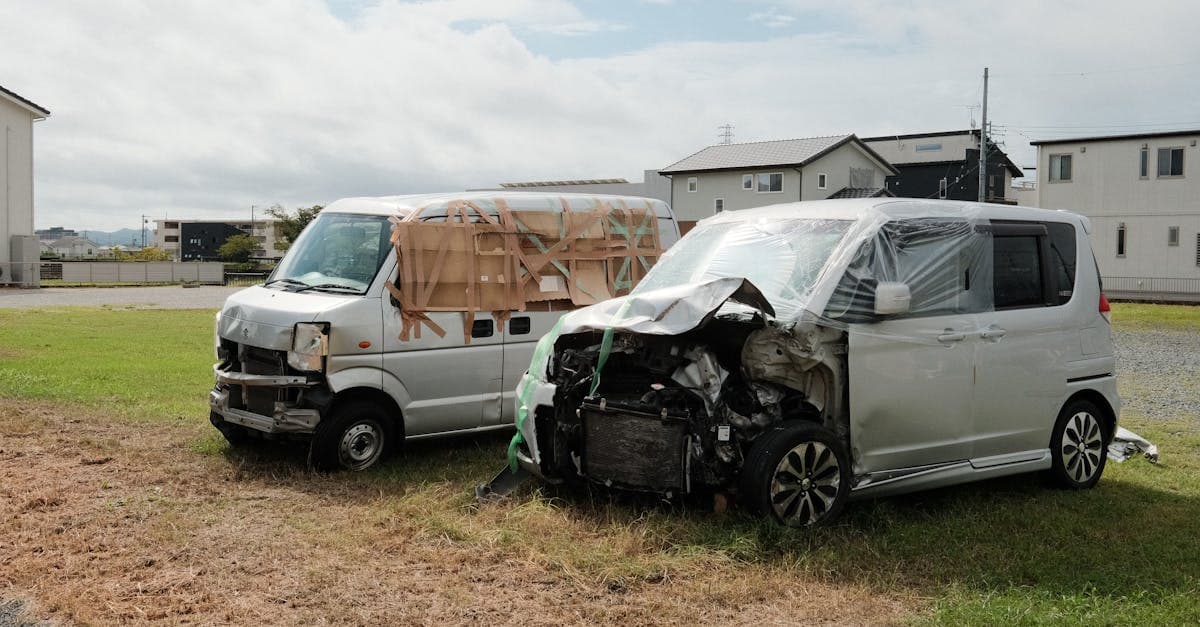
Collision insurance is surrounded by misconceptions that cost drivers real money. Let us clear up the most common myths before diving into how this coverage actually works.
Myth one: collision insurance covers any damage to your vehicle. It does not. Collision specifically covers damage from impact with another vehicle or object. Damage from theft, vandalism, weather events, or animal strikes falls under comprehensive coverage — a separate policy.
Myth two: if the other driver is at fault, you do not need collision insurance. While the at-fault driver's liability insurance should eventually pay, the process can take weeks or months. Your collision coverage pays immediately, letting you get repairs started without waiting for fault determination and liability settlement.
Myth three: collision insurance pays the full replacement cost of your vehicle. It pays the actual cash value — which accounts for depreciation. A three-year-old car that cost $35,000 new might have an actual cash value of $22,000. That is the maximum your collision coverage will pay for a total loss.
Myth four: dropping collision coverage is always smart on older cars. Sometimes, but not always. The decision depends on the vehicle's current value, your ability to replace it out of pocket, and how critical the vehicle is to your daily life.
Collision coverage is the structural support that keeps your finances standing after a crash. Understanding how it actually works — stripped of myths and misconceptions — helps you make coverage decisions based on facts rather than assumptions. This guide provides the facts you need.
When to Drop Collision Coverage: The Financial Decision
In practice, this works out to Dropping collision coverage is a significant financial decision that depends on your vehicle's value, your savings, and your ability to absorb a total loss. Here is a framework for making this choice.
The ten percent rule: Consider dropping collision when your annual collision premium exceeds 10 percent of your vehicle's actual cash value. If your vehicle is worth $4,000 and your collision premium is $500 per year, you are paying 12.5 percent of the vehicle's value annually for coverage. At that rate, you effectively insure the entire vehicle value in premiums every eight years.
The self-insurance test: Could you replace your vehicle out of pocket if it were totaled tomorrow? If yes, collision coverage is optional. If no, the coverage is likely still worth carrying regardless of the percentage calculation. This test is about financial capability, not vehicle value alone.
The transportation dependency factor: If your vehicle is essential for getting to work and you have no alternative transportation, the consequences of losing it without coverage are severe. Even on a low-value vehicle, collision coverage may be worth carrying if the alternative is losing your income.
The gradual transition: Some drivers gradually increase their deductible as their vehicle ages rather than dropping coverage entirely. Moving from a $500 to a $1,000 to a $2,000 deductible reduces premiums while maintaining catastrophic protection. This approach preserves coverage for severe damage while accepting that minor damage is not worth claiming.
When lenders decide for you: If your vehicle has an outstanding loan or lease, your lender almost certainly requires collision coverage. You cannot drop it until the loan is paid off without risking a lender-placed policy that costs significantly more.
Gap Insurance: When Collision Coverage Is Not Enough
Here is what you actually need to do. Collision insurance pays your vehicle's actual cash value — but if you owe more than the vehicle is worth, there is a dangerous gap between your insurance payout and your loan balance. Gap insurance bridges this divide.
How the gap develops: New vehicles depreciate rapidly — losing 20 to 30 percent of their value in the first year. If you financed with a small down payment, long loan term, or rolled negative equity from a previous vehicle into the new loan, you can easily owe $5,000 to $10,000 more than your vehicle is worth.
What gap insurance covers: If your vehicle is totaled in a collision and the ACV payout is $18,000 but your loan balance is $24,000, gap insurance pays the $6,000 difference. Without gap coverage, you owe $6,000 on a vehicle you no longer have.
Where to buy gap insurance: Dealers sell gap coverage at the time of purchase, often for $500 to $800. Auto insurers sell it as a policy endorsement, typically for $20 to $40 per year. The insurer option is almost always cheaper. Your credit union or bank may also offer gap coverage as a loan add-on.
When gap insurance makes sense: Gap coverage is most valuable during the first two to three years of a loan, when the depreciation-vs-loan-balance gap is widest. As you pay down the principal and the depreciation curve flattens, the gap narrows and gap coverage becomes less necessary.
New car replacement coverage is an alternative offered by some insurers. Instead of paying the gap between ACV and loan balance, it pays to replace your totaled vehicle with a new one of the same make and model. This coverage is typically available only for vehicles less than one to two years old.
Vehicle Safety Features and Collision Insurance Discounts
The fix is straightforward. Modern vehicles are equipped with collision avoidance technology that reduces accident frequency and severity. Many insurers reward these features with collision premium discounts.
Automatic emergency braking (AEB): Vehicles with AEB systems that automatically apply brakes when a collision is imminent experience significantly fewer front-end collisions. Insurers offer discounts of 5 to 15 percent on collision coverage for vehicles equipped with this technology.
Forward collision warning: Systems that alert drivers to an impending collision without automatically braking also earn discounts, though typically smaller than AEB discounts. The warning gives drivers additional reaction time to avoid or reduce the severity of an impact.
Lane departure warning and assistance: These systems reduce single-vehicle accidents caused by drifting out of the lane. While the discount is modest — typically 2 to 5 percent — it contributes to an overall safety feature discount that can be meaningful.
Blind spot monitoring: By alerting drivers to vehicles in their blind spots, these systems reduce lane-change collisions. The collision premium impact varies by insurer but generally contributes to a lower risk rating.
Adaptive cruise control: By maintaining a safe following distance automatically, adaptive cruise control reduces rear-end collisions. Some insurers factor this feature into their collision risk assessment.
The cumulative effect: While individual safety feature discounts may seem small, a vehicle equipped with multiple advanced safety systems can earn cumulative discounts of 10 to 25 percent on collision coverage. When shopping for a new vehicle, consider the insurance impact of safety features as part of your total cost of ownership calculation.
Understanding Betterment Charges in Collision Claims
In practice, this works out to When collision repairs improve your vehicle beyond its pre-accident condition, the insurer may charge you for the improvement — a concept called betterment. Understanding betterment prevents surprise charges during the repair process.
What betterment means: Insurance aims to restore your vehicle to its pre-loss condition — not better, not worse. If a collision repair replaces worn components with new ones, the new parts improve your vehicle's condition. The insurer may charge you for this improvement because they are obligated to restore, not upgrade.
Common betterment scenarios: The most frequent betterment charge involves tires. If your vehicle has tires with 50 percent tread wear and the collision damages two tires, the insurer replaces them with new tires but charges you 50 percent of the cost — reflecting the betterment from worn to new. Similar charges can apply to batteries, brake components, and suspension parts.
Paintwork and betterment: If your vehicle's existing paint is faded or damaged from age and the collision repair includes repainting panels, the insurer generally does not charge betterment for paint because matching the existing finish requires full repainting regardless. However, if you request a full-vehicle repaint when only one panel was damaged, the additional cost would be your responsibility.
When betterment is unfair: Betterment charges can feel unfair when the worn part cannot be repaired — only replaced with new. If the collision destroyed a tire, you cannot buy a 50-percent-worn replacement. Some states have regulations limiting betterment charges in these situations, and some policies exclude betterment charges entirely.
Challenging betterment charges: Review your policy's betterment clause before you need it. If you receive a betterment charge that seems unreasonable, negotiate with the adjuster. Document the condition of the replaced components and reference any state regulations that may limit the charge.
When Your Vehicle Is Totaled: How Collision Coverage Responds
In practice, this works out to A total loss — when repair costs exceed a percentage of your vehicle's value — triggers a different collision insurance response. Instead of paying for repairs, the insurer pays your vehicle's actual cash value. Understanding this process is the structural support that keeps your finances standing after a crash for managing your financial expectations.
When is a vehicle totaled? Most states and insurers declare a total loss when repair costs exceed 70 to 80 percent of the vehicle's actual cash value. Some states set specific thresholds — Texas uses 100 percent, while Iowa uses 50 percent. Your insurer applies either the state threshold or their own, whichever is stricter.
Actual cash value calculation: The insurer determines your vehicle's pre-accident fair market value based on year, make, model, mileage, condition, and local market data. They typically use valuation services like CCC Intelligent Solutions or Mitchell. The ACV is what your vehicle was worth immediately before the accident — not what you paid for it or what it would cost to buy new.
The total loss payment: You receive the actual cash value minus your deductible. If your vehicle's ACV is $18,000 and your deductible is $1,000, you receive $17,000. If you have an outstanding loan of $20,000, you still owe the lender $3,000 after the insurance payment — a gap that gap insurance would cover.
Challenging a low valuation: If the insurer's ACV seems too low, you have the right to negotiate. Gather evidence of comparable vehicles for sale in your area, document any recent maintenance or improvements, and present a written counteroffer. Many insurers will adjust their valuation when presented with solid comparable data.
Keeping the vehicle: In most states, you can keep a totaled vehicle, but the insurer deducts the salvage value from your payment. You receive a salvage title, which affects future insurance options and resale value.
Collision Claims in Parking Lots: A Common Scenario
Here is what you actually need to do. Parking lot accidents account for a significant percentage of collision claims, and they present unique challenges for fault determination and claim processing.
How common are parking lot accidents? Industry data suggests that roughly 20 percent of all vehicle accidents occur in parking lots. These range from minor door dings to significant backing collisions. Many involve low speeds but can still cause thousands of dollars in damage, particularly to modern vehicles with sensors, cameras, and complex bumper systems.
Fault in parking lots is often unclear. Unlike road accidents where traffic laws generally establish right of way, parking lot fault determination can be complicated. The general rule is that moving vehicles must yield to vehicles already in a travel lane, and backing vehicles are typically assigned more fault. But shared fault is common in parking lot incidents.
When the other driver leaves: Hit-and-run incidents in parking lots are common because witnesses are rare and the at-fault driver may not realize they caused damage. If you discover damage and cannot identify the other driver, your collision coverage pays for repairs minus your deductible. Some insurers treat parking lot hit-and-runs as uninsured motorist claims, which may have a different deductible.
Documentation is critical. Parking lot claims benefit enormously from security camera footage. Before filing a claim, check whether the parking lot has cameras that may have captured the incident. Many businesses will provide footage if asked promptly.
Prevention strategies include parking farther from entrances where spaces are less congested, using pull-through spaces to avoid backing, and being extra cautious in high-traffic areas. These simple habits significantly reduce your parking lot collision risk.
The Collision Repair Process: From Estimate to Completion
The fix is straightforward. Once you file a collision claim, the repair process follows a series of steps that affect your out-of-pocket costs, repair quality, and timeline. Understanding this process is understanding the blueprint for rebuilding your vehicle and your confidence from start to finish.
The initial estimate: Your insurer arranges a damage assessment — either through a physical inspection or a photo-based estimate submitted through their app. The adjuster creates an estimate that includes parts costs, labor hours, and paint work. This initial estimate may not capture all damage if hidden damage exists beneath surface panels.
Choosing your repair shop: Most insurers maintain a network of preferred or direct repair shops that meet quality standards and offer guaranteed work. You generally have the right to choose any licensed body shop, but using a preferred shop streamlines the process — the shop communicates directly with the insurer and billing is handled without your involvement.
Supplements for hidden damage: During teardown, the repair shop may discover additional damage not visible during the initial inspection. The shop requests a supplement from the insurer to cover the additional work. Supplements are routine and expected in moderate to severe collision repairs.
OEM vs aftermarket parts: Your insurer's estimate may specify aftermarket parts — non-original manufacturer parts that cost less. Some states give you the right to request original equipment manufacturer parts, though you may pay the difference. Many newer vehicles should use OEM parts to maintain proper fit and function.
Repair timeline: Simple repairs take three to five business days. Moderate damage takes one to two weeks. Severe structural damage can take three to four weeks or longer, especially if parts are backordered. Your insurer can provide a timeline estimate based on the damage assessment.
The Big Picture on Collision Insurance
Think of your collision insurance as the load-bearing wall between collision damage and your savings — a financial tool that converts an unpredictable, potentially devastating expense into a manageable, predictable cost. Like any tool, it works best when matched to the job at hand.
For a new vehicle with a loan, collision coverage is the right tool — essential, non-negotiable, and worth the premium. For a middle-aged vehicle, it remains valuable but should be tuned through deductible optimization. For an old vehicle approaching the end of its useful life, the tool may no longer fit the job, and self-insuring becomes the smarter strategy.
The key insight is that collision coverage is not a permanent commitment. It is a lifecycle decision that should evolve as your vehicle ages, as your financial situation changes, and as the math shifts between the premium you pay and the protection you receive.
Review your collision coverage annually. Run the numbers. Make the informed choice. And drive with the confidence that comes from knowing your coverage decision was made deliberately, not by default.
Continue reading

How to Use an Insurance Quote Comparison Spreadsheet Effectively
A simple spreadsheet that lines up coverage elements side by side transforms confusing quotes into clear comparisons. Setting up this tool correctly makes your decision data-driven rather than gut-driven.
Policy Checkup for Auto Insurance: Are You Still Getting the Best Deal?
Auto insurance checkups should review liability limits, collision and comprehensive deductibles, uninsured motorist coverage, and available discounts. Driving changes and vehicle changes affect your needs.

When Assignment of Benefits Hurts Policyholders: Warning Signs
AOB can go wrong when contractors inflate bills, file lawsuits without your knowledge, or perform shoddy work you cannot control. Recognizing warning signs protects you from AOB abuse.