Does Comprehensive Insurance Cover Flood Damage to Your Car?

The name comprehensive leads many drivers to believe this coverage handles everything. It does not. This single misconception is the root of countless claim denials and policyholder frustrations. Let us correct the most common myths right now.
Myth one: comprehensive insurance covers mechanical breakdowns. It does not — that is what a warranty or mechanical breakdown insurance covers. Myth two: comprehensive covers damage from potholes. Hitting a pothole is a collision event because your vehicle struck a road surface. Myth three: comprehensive covers personal items stolen from your car. It covers the vehicle itself, but items inside are covered by your homeowners or renters policy.
Myth four: comprehensive and full coverage are the same thing. Full coverage is an informal term that typically means liability plus collision plus comprehensive — comprehensive is only one piece. Myth five: filing a comprehensive claim will raise your rates the same as an at-fault accident. In most states and with most insurers, comprehensive claims have a smaller rate impact because they involve events outside your control.
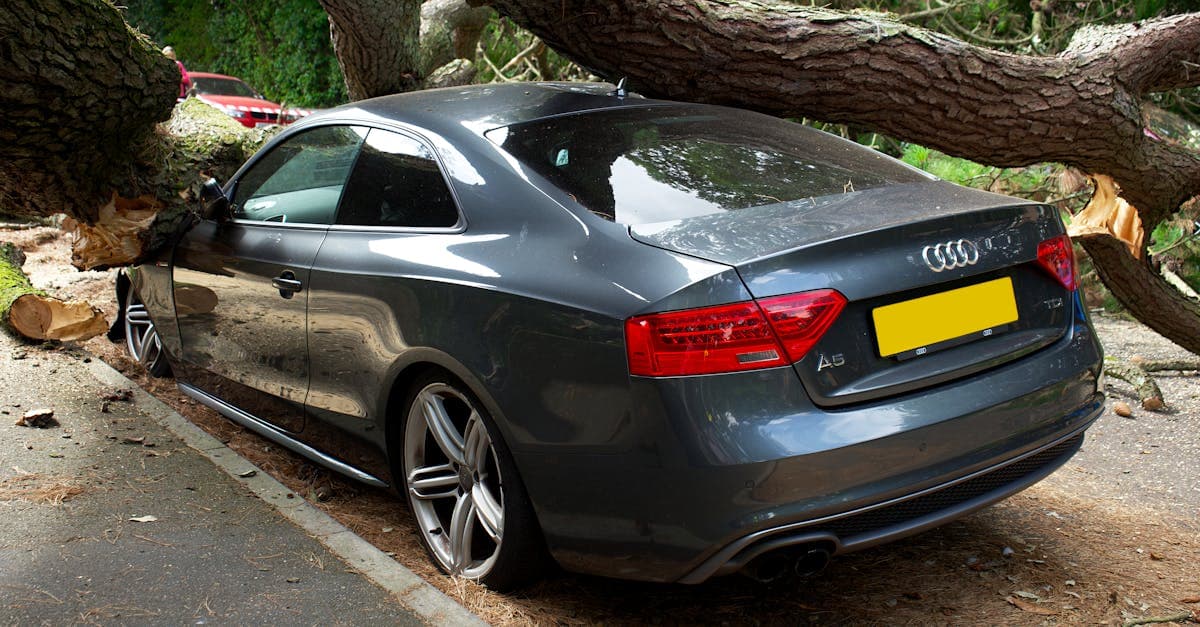
Comprehensive insurance is the roof that protects your vehicle from everything falling from above. It is broad protection against a specific category of risks, but it has boundaries. Understanding those boundaries — what is covered, what is excluded, and how claims are handled — is essential to getting full value from your coverage.
Flood Damage and Comprehensive Auto Insurance
Here is what you actually need to do. Flooding is one of the most destructive events a vehicle can experience, and comprehensive insurance is the only auto coverage that pays for flood-related damage. Understanding how flood claims work is critical for drivers in any area where heavy rain, storm surge, or rising water can reach vehicles.
What flood damage includes: Comprehensive covers damage from rising water, flash floods, storm surge, and any other water intrusion that submerges or partially submerges your vehicle. This includes engine hydrolocking from water ingestion, electrical system failure from water infiltration, interior damage from standing water, and mold growth resulting from water exposure.
Total loss threshold: Flood-damaged vehicles are frequently declared total losses because water infiltration causes hidden damage to electronics, wiring, and mechanical systems that may not manifest immediately but creates long-term reliability problems. Insurers often total flood vehicles even when the visible damage appears repairable because the hidden damage risk is too high.
Flood claim process: Do not attempt to start a flood-damaged vehicle. Have it towed to a dry location and contact your insurer immediately. Document the high-water mark on the vehicle with photographs. The adjuster will assess both visible damage and likely hidden damage based on water depth and duration of submersion.
What flood coverage does not include: Comprehensive auto insurance covers flood damage to your vehicle but not to your home or other property — that requires separate flood insurance. Also, if you deliberately drive into a flooded roadway when warnings are clearly posted, the insurer may investigate whether the damage was preventable, though claims are rarely denied on this basis alone.
Prevention strategies: Park on high ground during heavy rain warnings. Avoid underground parking garages in flood-prone areas during storms. Monitor weather alerts and move your vehicle before flooding reaches your location. Prevention avoids both the claim hassle and the potential total loss of a vehicle.
How Comprehensive Claims Affect Your Insurance Rates
The fix is straightforward. One of the most important advantages of comprehensive coverage is that claims generally affect your rates less than collision or liability claims. Understanding this dynamic helps you make smarter decisions about when to file a claim and when to pay out of pocket.
Why comprehensive claims are treated differently: Comprehensive events — weather, theft, animal strikes, vandalism — are outside your control. Insurers recognize that these events do not indicate higher driving risk, so they weigh them less heavily in rate calculations. A driver who files a hail damage claim is not considered a higher risk driver the way a driver who causes a collision is.
The rate impact reality: While comprehensive claims have less rate impact than at-fault claims, they are not entirely rate-neutral. Multiple comprehensive claims in a short period can trigger premium increases because they signal higher-than-average claim frequency. A single comprehensive claim may produce little or no rate increase, but two or three within a few years will likely affect your premium.
When to file vs pay out of pocket: The general guidance is to file comprehensive claims only when the damage significantly exceeds your deductible. If your deductible is $500 and the damage is $600, paying the $600 out of pocket avoids putting a claim on your record for a net insurance benefit of only $100. If the damage is $3,000, filing the claim makes clear financial sense.
State regulations: Some states have laws limiting or prohibiting insurers from raising rates based on comprehensive claims for specific events, such as weather damage. Check your state's regulations to understand what protections you have against rate increases from comprehensive claims.
Claims history window: Most insurers consider your claims history over the past three to five years. A comprehensive claim filed four years ago will have less impact on your current rates than one filed last year. This window means that the rate impact of any single claim is temporary.
Comprehensive Coverage and Rental Cars
Here is what you actually need to do. Your personal comprehensive insurance may extend to rental vehicles, potentially saving you from purchasing redundant coverage at the rental counter. Understanding exactly what your policy covers when you rent a car prevents both unnecessary spending and unexpected gaps.
Personal policy extension: Most personal auto insurance policies extend comprehensive coverage to rental vehicles driven by the policyholder. This means if the rental car is damaged by hail, stolen, vandalized, or otherwise suffers a comprehensive loss, your personal policy covers it subject to your deductible.
Limitations to be aware of: Your personal comprehensive coverage typically matches whatever limits and deductible apply to your own vehicle. It may not cover certain types of rental vehicles such as exotic cars, large trucks, or vehicles rented outside the United States. Additionally, loss of use charges — the rental company's lost revenue while the vehicle is being repaired — may or may not be covered depending on your policy.
Credit card coverage: Many credit cards offer rental car damage coverage when you pay for the rental with the card. This coverage is typically secondary to your auto insurance, meaning your personal policy pays first. However, some premium credit cards offer primary coverage that pays before your auto insurance, which can protect your claim history and deductible.
Business rental considerations: If you rent a vehicle for business purposes, your personal auto policy may not provide coverage. Business rental coverage depends on whether your personal policy includes business use or whether your employer's commercial auto policy extends to rented vehicles.
International rentals: Comprehensive coverage from your personal policy typically does not extend to vehicles rented outside the United States and Canada. When renting internationally, purchasing the rental company's coverage or a separate international auto insurance policy is usually necessary.
Documenting Comprehensive Damage for Maximum Payout
The fix is straightforward. The quality of your damage documentation directly affects the speed and amount of your comprehensive claim settlement. Thorough documentation from the moment you discover the damage gives you the strongest possible position.
Photograph everything immediately: Take photos before touching, moving, or cleaning anything. Capture wide-angle shots showing the overall scene and damage context. Then take detailed close-ups of every damaged area. Include photos that show the cause of damage if visible — the fallen tree, the hail on the ground, the broken window where entry occurred.
Video documentation: In addition to photos, record a walk-around video narrating the damage. Video captures details that photographs might miss and provides a timestamped record of the vehicle's condition immediately after the event. Include surrounding context — other damaged vehicles, weather conditions, broken glass on the ground.
Written inventory of damage: Create a written list of every damaged component you can identify. Note the panel location, type of damage, and approximate severity. This list serves as your personal record and helps ensure nothing is overlooked during the adjuster's assessment.
Pre-loss condition evidence: If you have recent photographs or video of your vehicle in pre-loss condition, these establish a baseline that supports your claim. Regular photos of your vehicle — especially after detailing or maintenance — create a documented condition history that an adjuster can reference.
Keep all records: Save repair estimates, towing receipts, police reports, correspondence with the insurer, and any other documents related to the claim. If you dispute the settlement amount, this documentation supports your position. If you need to escalate to your state's insurance department, organized records make the process smoother.
Animal Collisions and Comprehensive Insurance
The fix is straightforward. Animal-related vehicle damage is one of the most common comprehensive claims, particularly in rural and suburban areas where wildlife corridors intersect with roadways. Understanding how these claims work helps you respond appropriately when an animal encounter occurs.
Why animal strikes are comprehensive claims: The insurance industry classifies animal collisions as comprehensive — not collision — because the animal is an external, uncontrollable hazard rather than a roadway object. This classification benefits policyholders because comprehensive claims generally have less premium impact than collision claims.
Deer collisions: White-tailed deer account for the vast majority of animal collision claims. The Insurance Information Institute estimates that deer-vehicle collisions exceed 1.5 million annually, with average claim costs above $4,300. Collisions spike dramatically during October through December when deer mating season coincides with reduced daylight hours.
Other animal claims: Beyond deer, comprehensive covers collisions with moose, elk, bears, livestock that wander onto roadways, large birds, and even smaller animals when the resulting vehicle damage is significant. In some regions, wild boar, alligators, and coyotes contribute to claim frequency.
The swerve distinction: Here is a critical detail many drivers miss. If you swerve to avoid an animal and hit a tree, guardrail, or ditch instead, that is a collision claim — not comprehensive. Your vehicle did not strike the animal; it struck a fixed object. This distinction can mean a different deductible applies and a different impact on your rates. When avoidance is not safely possible, striking the animal directly is sometimes the better insurance outcome, though personal safety always comes first.
Documentation requirements: For animal collision claims, photograph the damage, the animal if safely possible, and the location. Note the time and weather conditions. A police report strengthens the claim, particularly in areas where deer crossings are well documented.
When Comprehensive Insurance Is Required
Here is what you actually need to do. Unlike liability insurance, comprehensive coverage is not required by state law. However, financial institutions that hold a stake in your vehicle frequently mandate it as a condition of financing or leasing. Understanding these requirements helps you comply without overpaying.
Lender requirements: If you financed your vehicle through a bank, credit union, or dealer financing, your loan agreement almost certainly requires comprehensive coverage for the life of the loan. The lender has a financial interest in the vehicle — if it is stolen or destroyed by a covered event, they want assurance that insurance will pay enough to cover the outstanding loan balance.
Lease requirements: Leased vehicles always require comprehensive coverage because the leasing company owns the vehicle. Lease agreements typically specify maximum deductible amounts — often $500 or $1,000 — that you must maintain throughout the lease term. Exceeding the specified deductible violates your lease agreement.
Force-placed insurance: If you drop comprehensive coverage while your vehicle is financed or leased, the lender will purchase a policy on your behalf and add the cost to your loan payments. Force-placed insurance is significantly more expensive than coverage you purchase yourself and provides minimum protection. Avoiding force-placed insurance by maintaining your own coverage always saves money.
After payoff: Once you own your vehicle outright, the decision to carry comprehensive is entirely yours. No state requires it for registered vehicles. At this point, the decision becomes a financial calculation based on your vehicle's value, your local risks, and your ability to absorb a total loss out of pocket.
Employer requirements: Some employers who provide company vehicles or reimburse employees for business use require comprehensive coverage. Check your employment agreement or vehicle use policy for specific requirements.
Comprehensive Insurance for New Vehicles
The fix is straightforward. New vehicles represent significant financial investments that warrant careful comprehensive coverage decisions. Whether required by your lender or chosen by you, comprehensive coverage on a new vehicle comes with considerations unique to newer cars.
Lender requirements: Most new vehicle purchases involve financing, and virtually all lenders require comprehensive coverage as a loan condition. You typically cannot choose to skip comprehensive on a financed vehicle. The lender specifies maximum deductible amounts — usually $500 or $1,000 — that you must maintain throughout the loan.
Rapid depreciation risk: New vehicles depreciate fastest in their first two to three years. A vehicle purchased for $35,000 may be worth $25,000 after two years but still have a loan balance of $28,000. Comprehensive coverage pays actual cash value — $25,000 — leaving you $3,000 short of your loan balance. Gap insurance addresses this specific risk and is strongly recommended for new vehicle purchases.
New-car replacement endorsements: Some insurers offer endorsements that replace a totaled new vehicle with a brand-new equivalent rather than paying actual cash value. These endorsements typically apply for the first one to two years of ownership and cost an additional premium. For new vehicles with rapid depreciation, this endorsement can be extremely valuable.
Technology repair costs: New vehicles contain expensive sensors, cameras, computers, and driver assistance systems that increase comprehensive repair costs. A hail-damaged windshield on a vehicle with adaptive cruise control and lane departure sensors may cost $1,500 to replace and recalibrate, compared to $400 for a basic windshield. These higher repair costs make comprehensive coverage particularly important for technology-equipped new vehicles.
Lower deductible justification: For new vehicles, carrying a lower comprehensive deductible is often justified by the higher repair costs and greater financial exposure. The premium difference between a $250 and $500 deductible is modest relative to the vehicle's value and potential claim costs.
The Bottom Line on Comprehensive Coverage
Think of comprehensive insurance as the roof that protects your vehicle from everything falling from above. It stands between your vehicle and the forces that strike your vehicle while it sits still — weather, theft, animals, vandalism, and the countless other non-collision events that can damage or destroy a vehicle without warning.
The coverage is broad but not unlimited. It has clear boundaries that every policyholder should understand. It has a deductible that directly affects both your premium and your claim payout. And it has a value that changes as your vehicle ages and depreciates.
Master these three elements — coverage scope, deductible optimization, and value assessment — and you will have comprehensive insurance working at peak efficiency for your situation. The protection is real, the cost is manageable, and the peace of mind is worth far more than the premium.
Continue reading

How to Use an Insurance Quote Comparison Spreadsheet Effectively
A simple spreadsheet that lines up coverage elements side by side transforms confusing quotes into clear comparisons. Setting up this tool correctly makes your decision data-driven rather than gut-driven.

Policy Checkup for Auto Insurance: Are You Still Getting the Best Deal?
Auto insurance checkups should review liability limits, collision and comprehensive deductibles, uninsured motorist coverage, and available discounts. Driving changes and vehicle changes affect your needs.

When Assignment of Benefits Hurts Policyholders: Warning Signs
AOB can go wrong when contractors inflate bills, file lawsuits without your knowledge, or perform shoddy work you cannot control. Recognizing warning signs protects you from AOB abuse.